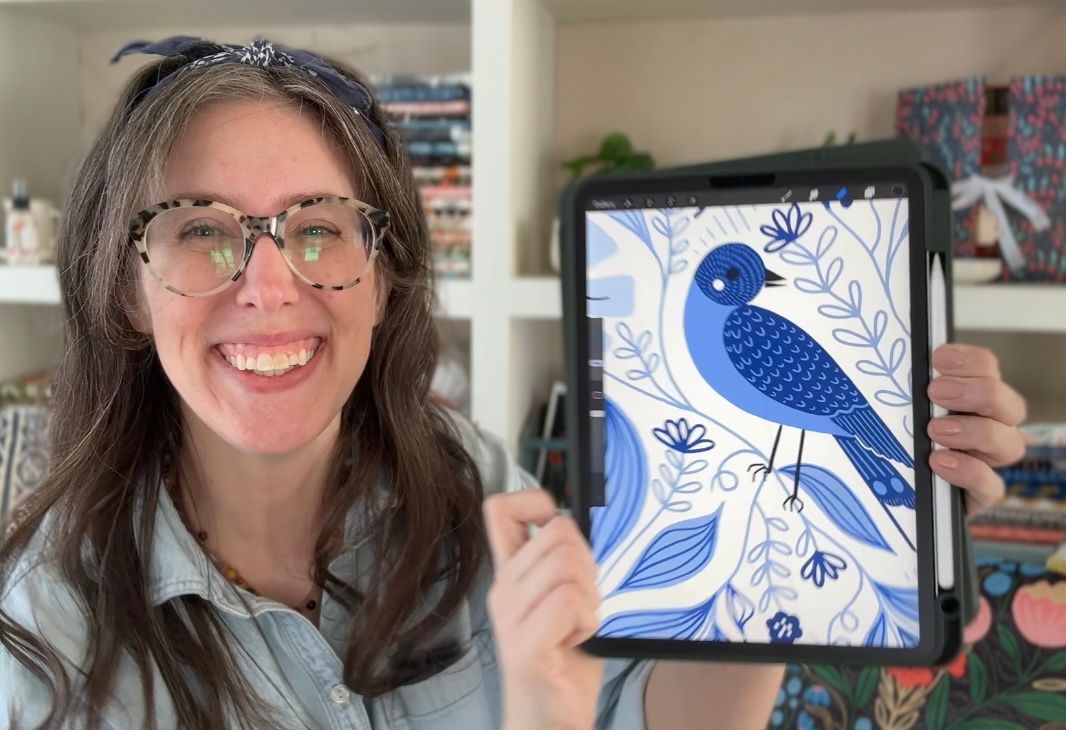
5 Things Every Artist Must Do to Build a Successful Art Business
So many talented artists are told that a professional art career is an impossible dream — by people outside the art world, and sometimes by fellow artists who've given up on their own. The advice to "be practical" and "keep art as a hobby" is everywhere. And while practicality has its place, building a successful art business doesn't have to stay an unrealized dream.
I'm Stacie Bloomfield, the founder of Gingiber — a surface pattern design and art licensing brand I built from my dining room table while working as a Starbucks manager, with a newborn at home, and no roadmap in sight. Today, Gingiber has products in 1,400+ brick-and-mortar stores and generates $2M+ annually. I've also helped 5,000+ artists build real income from their work. Here's what I know works.
1. Create Art That Is Both Personal and Marketable
Every artist has to find the balance between making art they love and making art their market responds to. The key to finding that balance — and staying there — is first discovering your signature style and building your brand around it. Then understanding what your potential customers actually want and letting that inform your creative decisions without erasing your voice.
The sweet spot is where your genuine style meets a real buyer's real need. That intersection is where sustainable creative businesses live. Art that's only personal might be beautiful but hard to sell. Art that's only commercial can be lucrative but hollow. The artists who build lasting businesses live in that middle territory, and they get there by making a lot of work and paying attention to what resonates.
2. Build a Strong, Cohesive Portfolio Before Pitching
Before you pitch a licensing deal, approach a wholesale buyer, or launch a product line, you need a portfolio that tells a clear visual story. Not every drawing you've ever made — a curated body of work that shows a consistent style, a recognizable aesthetic, and an artistic vision that buyers can project onto their products.
A strong portfolio is what separates "I have ideas" from "I'm ready to work." It demonstrates that you can produce consistent, quality work — which is what every commercial buyer needs to know before they trust you with their brand. Without it, the best pitch in the world falls flat. With it, even a mediocre pitch can get a response.
3. Build a Strategy — and Put It in Writing
Having a clear business strategy isn't just for corporate types. For creative entrepreneurs, it means knowing which income streams you're pursuing, in what order, and why. It means understanding your target market, how to reach them, and what you're offering that no one else is.
The artists who burn out are usually the ones who are reacting to everything — jumping from opportunity to opportunity without a plan. The artists who build sustainable businesses decide what matters, focus on it, and measure whether it's working. A written strategy doesn't have to be long. It has to be real enough that you could hand it to someone else and they'd understand where you're going.
4. Take It Slow — Build One Income Stream Before Starting the Next
Constant hustle isn't the path to a creative career — it's the path to burnout and mediocre results across too many fronts. The artists I've watched build the most durable businesses are the ones who chose one income stream, got good at it, and built it to something real before moving on to the next.
That might mean spending six months building a licensing portfolio before thinking about wholesale. Or nailing your Etsy presence before launching print-on-demand. Depth before breadth. Roots before branches. The time it takes to do this feels frustrating when you can see all the possibilities. But the artists who try to build everything at once almost always find that nothing fully works.
5. Learn, Adapt, and Keep Going
No strategy is right on the first try. The artists who win in the long run are the ones who pay attention to what's actually working, adjust when something isn't, and keep going even when the path feels uncertain. That combination of discipline and flexibility — staying committed to the goal while remaining open to a better route — is what separates a creative career from a creative hobby.
Success in the art business isn't a destination you arrive at. It's a practice you sustain. The artists I admire most are the ones who've been at it for years, who've had things fail and come back anyway, and who've built something real through the accumulation of consistent effort rather than a single lucky break.
These five steps sound simple. They're not easy. But any artist who makes work they believe in and is willing to do the business part seriously — not just the creative part — has a real shot. If you want the full picture of how Stacie Bloomfield teaches this, start with The Artist's Side Hustle. It's the practical guide to making a living from your art, available now wherever books are sold.
Frequently Asked Questions About Building a Successful Art Business
What are the most important things to do first when starting an art business?
Start by building a strong, cohesive portfolio that reflects your signature style. Before pitching to companies or launching products, you need visual proof that you can produce consistent, market-ready work. In parallel, identify your first income stream — licensing, Etsy, wholesale, print-on-demand — and learn it deeply before expanding to others. The combination of a strong portfolio and a clear first direction is what creates momentum.
How do you make art that is both authentic and commercially viable?
The goal isn't to choose between personal expression and commercial appeal — it's to find where they intersect. Start by making art you genuinely love. Then study which aspects of that work resonate with buyers, collectors, or licensees. Adjust your focus toward the intersection without abandoning your voice. Stacie Bloomfield built Gingiber's entire portfolio around her authentic aesthetic — and found that what she loved making was also exactly what her buyers wanted.
Why do so many art businesses fail?
Most art businesses fail for one of three reasons: the artist never built a clear strategy, they tried to do too many things at once before any of them were established, or they stopped when results didn't come quickly enough. The remedy is a focused plan, one stream built at a time, and the patience to let things compound. Art businesses tend to be slow to start and fast to grow once the foundation is in place — the artists who stick around long enough to hit the inflection point are the ones who succeed.
About Stacie Bloomfield
Stacie Bloomfield is the founder of Gingiber, a surface pattern design and art licensing brand she built from her dining room table into a multimillion-dollar business with products in 1,400+ brick-and-mortar stores. She has earned $500K+ through art licensing and has taught 5,000+ artists how to build real income from their work.
She is the author of The Artist's Side Hustle (Hay House), a Moda fabric designer, and the host of the Art + Audience podcast. Her programs — including Side Hustle Society, Leverage Your Art, and the Art Licensing Pitch Playbook — help artists at every stage turn their creativity into consistent income.
StacieBloomfield.com needs the contact information you provide to us to contact you about our products and services. You may unsubscribe from these communications at anytime. See our privacy policy for terms and conditions and to learn how we protect your data.