What No One Tells You About Licensing: Juliana Tipton on Boundaries, Burnout, and Creative Joy
🎧 Listen to this episode: Apple Podcasts
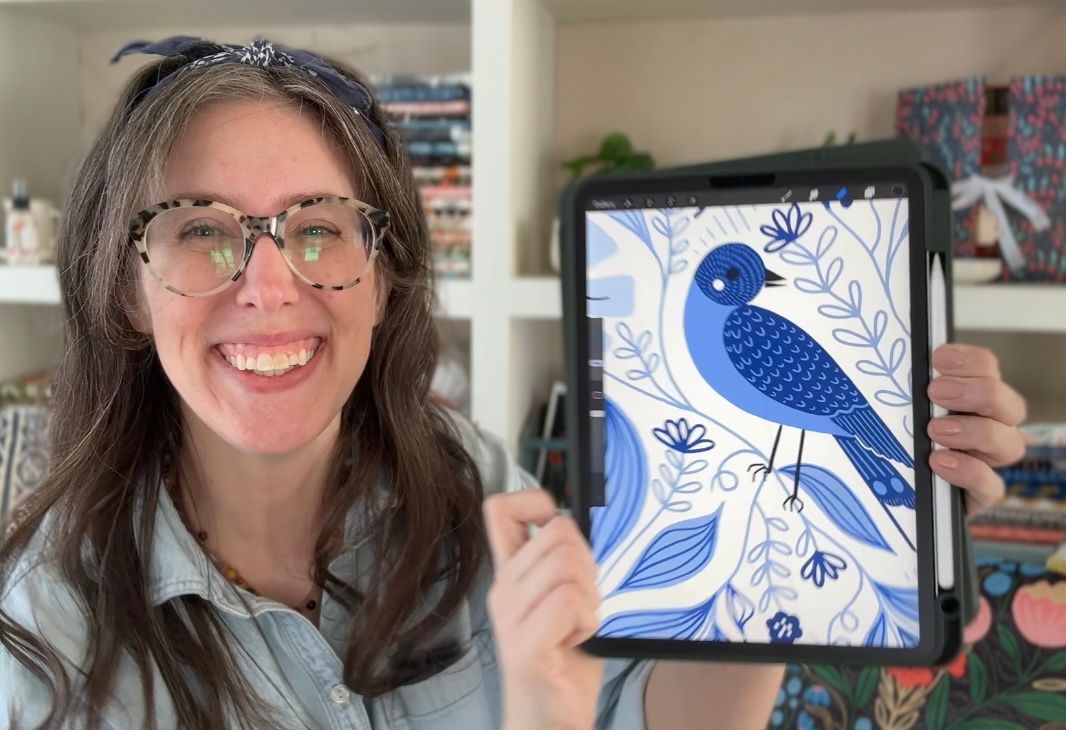
Juliana Tipton has done what most artists dream about — she's licensed her work with major fabric companies, landed products in national retailers, and built a real career from her art. But in this conversation, she's talking about the parts of the art licensing world that don't usually make it into the highlight reel: the moments of doubt, the deals that felt wrong, the burnout that came from saying yes too many times, and what it actually took to get her creative joy back.
In this episode of Art + Audience, Stacie Bloomfield sits down with Juliana — a San Diego-based surface designer and illustrator whose work has appeared with Cotton+Steel, Cloud9 Fabrics, Fringe Studio, and more — to talk about what she wishes someone had told her earlier about licensing. Not the strategy part. The human part.
If you've ever said yes to a deal that didn't feel right, pushed through burnout because you thought that's what hustle looks like, or wondered whether the creative spark you started with is still there — this episode is for you.
RESOURCES MENTIONED IN THIS EPISODE:
- julianatipton.com — Juliana's portfolio and shop; a great look at her surface design work and where to find her licensed collections.
- @jultipdesign on Instagram — where she shares her work, behind-the-scenes process, and the realities of building a licensing career.
- Art Licensing Pitch Playbook — Stacie's step-by-step guide to reaching the right companies with the right pitch. Because once you've protected your energy, you need a system that actually lands deals.
- Art Licensing Contract Walkthrough — a 30-minute video walkthrough of a real image license agreement with attorney Jason Aquilino. Knowing what you're signing is the first boundary you can set.
HERE ARE THE 5 KEY TAKEAWAYS FROM THIS EPISODE:
1️⃣ Saying Yes to Everything Is How Burnout Starts
The most common path to burnout in art licensing isn't working too hard on your own art — it's working too hard on art that doesn't feel like yours. When you say yes to every brief, every revision, every deal that comes your way, you end up creating for everyone except yourself. Burnout follows.
Juliana's experience mirrors what Stacie Bloomfield hears from artists across her community of 2,700+ members: the artists who burn out fastest are the ones who treated every opportunity as an obligation. The reset starts when you recognize that you're allowed to say no — and that a no to the wrong deal is a yes to the right one.
Selectivity isn't scarcity thinking. It's how sustainable licensing careers are actually built.
2️⃣ Burnout Is a Signal, Not a Personality Flaw
Creative burnout in art licensing is not a sign that you're not cut out for this business. It's a sign that something in your current setup isn't working — and it's worth paying attention to. The artists who recover from burnout fastest are the ones who treat it as information, not failure.
What Juliana found, and what comes up again and again in these conversations, is that burnout usually points to a specific source: a client relationship that's off, a type of work you've agreed to do that doesn't excite you, a pace that isn't sustainable. When you can name it, you can change it.
The goal isn't to power through. It's to figure out what you actually want from licensing — and build toward that.
3️⃣ Your Contract Is Where Your Boundaries Actually Live
Setting boundaries in art licensing doesn't start with a difficult conversation — it starts with your contract. What usage is permitted, for how long, in which territories, at what royalty rate — these aren't negotiating tactics, they're the baseline of protecting your work and your energy.
Most artists who end up feeling taken advantage of in licensing deals trace it back to a contract they didn't fully understand before they signed it. Juliana talks honestly about learning this lesson through experience. The knowledge is available — tools like the Art Licensing Contract Walkthrough exist specifically so artists can understand what they're agreeing to before it's too late to change it.
You don't need a lawyer for every deal. You need to know what the standard terms are, what's negotiable, and where your lines are — before someone else draws them for you.
4️⃣ The Work You Make When You're Not Depleted Is the Work That Licenses
There's a direct line between your creative energy and the quality of your licensable work. When you're running on empty, the work you produce is safe. Generic. It looks like everything else in the market — and that's exactly the kind of art that doesn't get deals.
Juliana's work with Cotton+Steel and Cloud9 Fabrics didn't happen because she was grinding. It happened because her designs had a distinct point of view — the kind that comes from a place of genuine creative engagement, not exhaustion. That's the paradox of art licensing: the more you protect your creative energy, the more commercial value your work has.
Resting isn't quitting. It's how you make sure you still have something worth licensing.
5️⃣ Creative Joy Is a Business Strategy, Not a Luxury
Protecting your creative joy isn't self-indulgent — it's how you make sure your work stays distinctive over a long career. The artists who last in licensing aren't the ones who produce the most. They're the ones who stay connected to why they make art in the first place.
That's harder than it sounds when you're trying to build a business. But Stacie Bloomfield has seen this up close with the 5,000+ artists she's taught: the ones who build lasting licensing income are the ones who never fully hand their creative life over to a client list. They protect time for art that's just theirs. They treat joy like a resource — because it is.
If you've lost the thread of what you love about making art, this episode is a good place to start finding it again.
MORE FROM JULIANA TIPTON
Find Juliana and her work here:
🌐 Website: julianatipton.com
📸 Instagram: @jultipdesign
SUBSCRIBE & REVIEW THE ART + AUDIENCE PODCAST
If this episode sparked something for you, the best way to support the show is to subscribe and leave a review on Apple Podcasts. It takes 30 seconds and helps other artists find us. New episodes drop every week. Subscribe so you never miss one — and if this sounds like something a creative friend needs to hear, share it with them.
Frequently Asked Questions About Burnout in Art Licensing
What causes burnout in art licensing?
Burnout in art licensing most often comes from saying yes to too many deals or briefs that don't align with your creative direction — producing work for clients rather than from genuine inspiration. Other common causes include unclear contracts that create open-ended obligations, underpricing that requires high volume to survive financially, and losing connection to the personal work that drew you to licensing in the first place. Recognizing the source makes recovery much faster.
How do you set boundaries with licensing clients?
Setting boundaries with licensing clients starts before you sign anything — in the contract itself. Specify exactly what usage is licensed (product type, territory, duration), what revision rounds are included, and what the payment terms are. Clear contracts prevent the most common boundary violations from ever happening. Beyond contracts, communicate your timeline and availability explicitly up front, and don't assume clients know your limits unless you've stated them.
How do you get your creative joy back after burnout?
Getting creative joy back after burnout usually means temporarily removing commercial pressure from your art practice. Make something with no audience, no brief, no deadline — just to make it. Many artists find that returning to the type of work that first excited them reconnects them to their original motivation. Once you're making freely again, you can gradually bring intentional licensing work back in — this time with clearer boundaries around what you'll agree to.
About Stacie Bloomfield
Stacie Bloomfield is the founder of Gingiber, a surface pattern design and art licensing brand she built from her dining room table into a multimillion-dollar business with products in 1,400+ brick-and-mortar stores. She has earned $500K+ through art licensing and has taught 5,000+ artists how to build real income from their work.
She is the author of The Artist's Side Hustle (Hay House), a Moda fabric designer, and the host of the Art + Audience podcast. Her programs — including Side Hustle Society, Leverage Your Art, and the Art Licensing Pitch Playbook — help artists at every stage turn their creativity into consistent income.
StacieBloomfield.com needs the contact information you provide to us to contact you about our products and services. You may unsubscribe from these communications at anytime. See our privacy policy for terms and conditions and to learn how we protect your data.